Il Cancello
—
The Gate
Shifting is not a task. It is a conversation.
Every time a hand closes around the lever and draws it across the gate, something small and private happens between the driver and the car. The wrist knows the distance. The fingers know the weight. The engine answers in its own language. To drive a car with a manual transmission is to speak, and to be spoken to in return.
Modern engineering has made this dialogue optional. The paddles are faster, the algorithms kinder, the torque converters more eloquent than any human heel. Nobody disputes it. But speed and eloquence are not the whole of joy. A meal prepared by hand is not faster than a meal delivered, and we still cook. A letter written by hand is not more efficient than a message sent, and we still write. Driving, too, deserves its ceremonies.
This project is an argument, made in aluminum and steel, that the ceremony still matters.
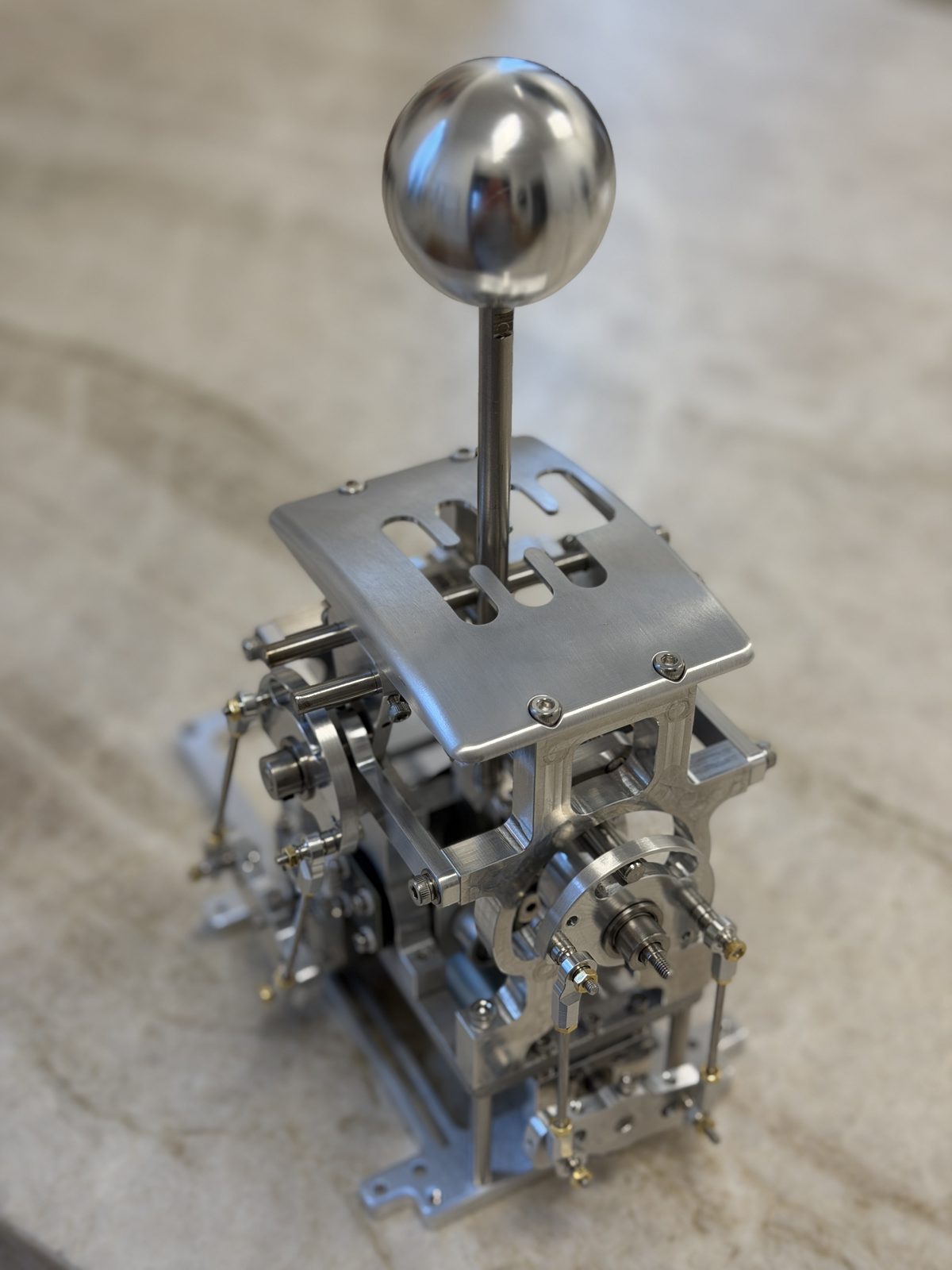
A silhouette that became a signature.
For half a century, the exposed chrome gate was the single most recognisable object in an Italian car. Seven fingers of polished metal, rising from black leather. A small architecture placed at the driver's right hand. You did not need to see the shield on the nose to know what you were sitting in; the gate told you.
It was never purely functional. The gate was a stage. Every shift was performed against it: the deliberate plane-change from second to third, the audible tink of the lever finding home, the faint resistance of the spring returning it to centre. Drivers learned the geometry the way a pianist learns a keyboard. Passengers watched. The gate made an ordinary street a place where something was happening.
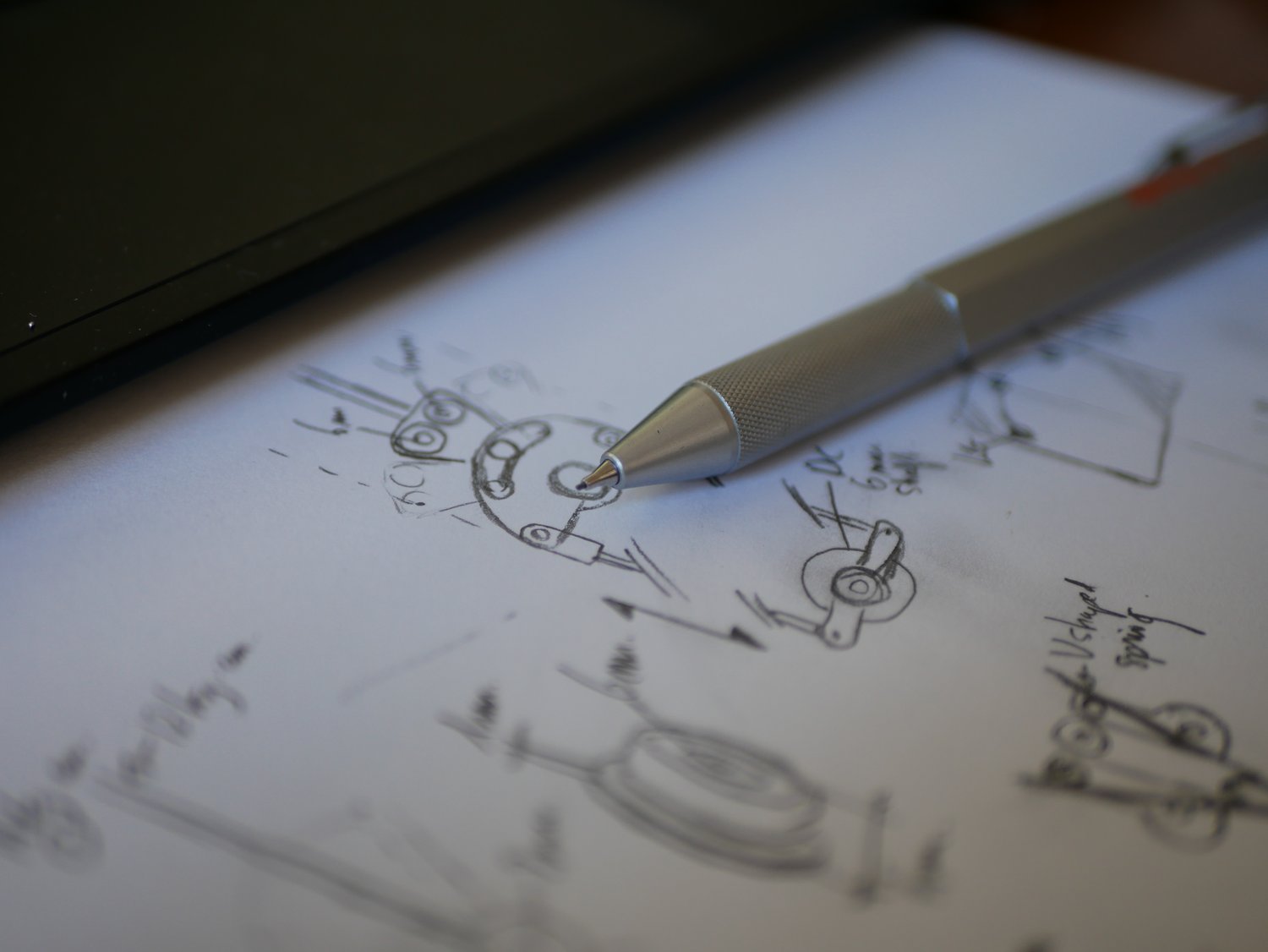
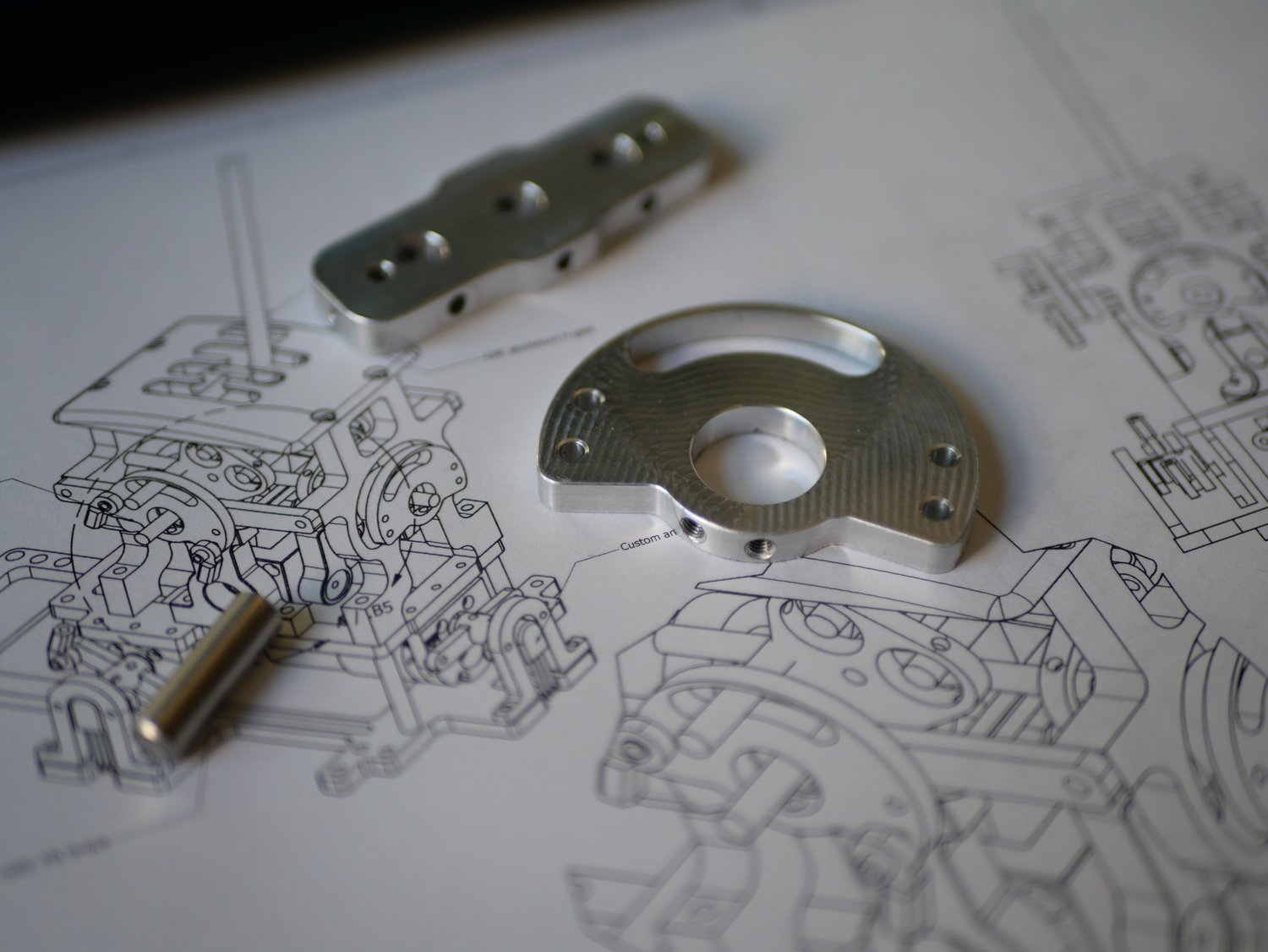
“The gate was never only a mechanism. It was the face the car showed the driver.” — From the working notes
What the modern Ferrari no longer does.
Somewhere between the 599 and today, the gate quietly disappeared. The last manual Ferrari was sold in 2012. The cars that followed are faster, cleaner, and, by every instrumented measure, better. They are also quieter in a way no microphone can record. The right hand, once busy, now rests.
The GTC4 Lusso is an extraordinary machine. A front-engined V12 shooting brake, four driven wheels, four seats, a real grand tourer in a world that had stopped making them. It deserves an interior that answers its ambition. The paddles do their work flawlessly. But the space between the seats, where a gate once stood, has been left polite and empty.
This study is an attempt to fill that space — with taste, and without violence to the car.
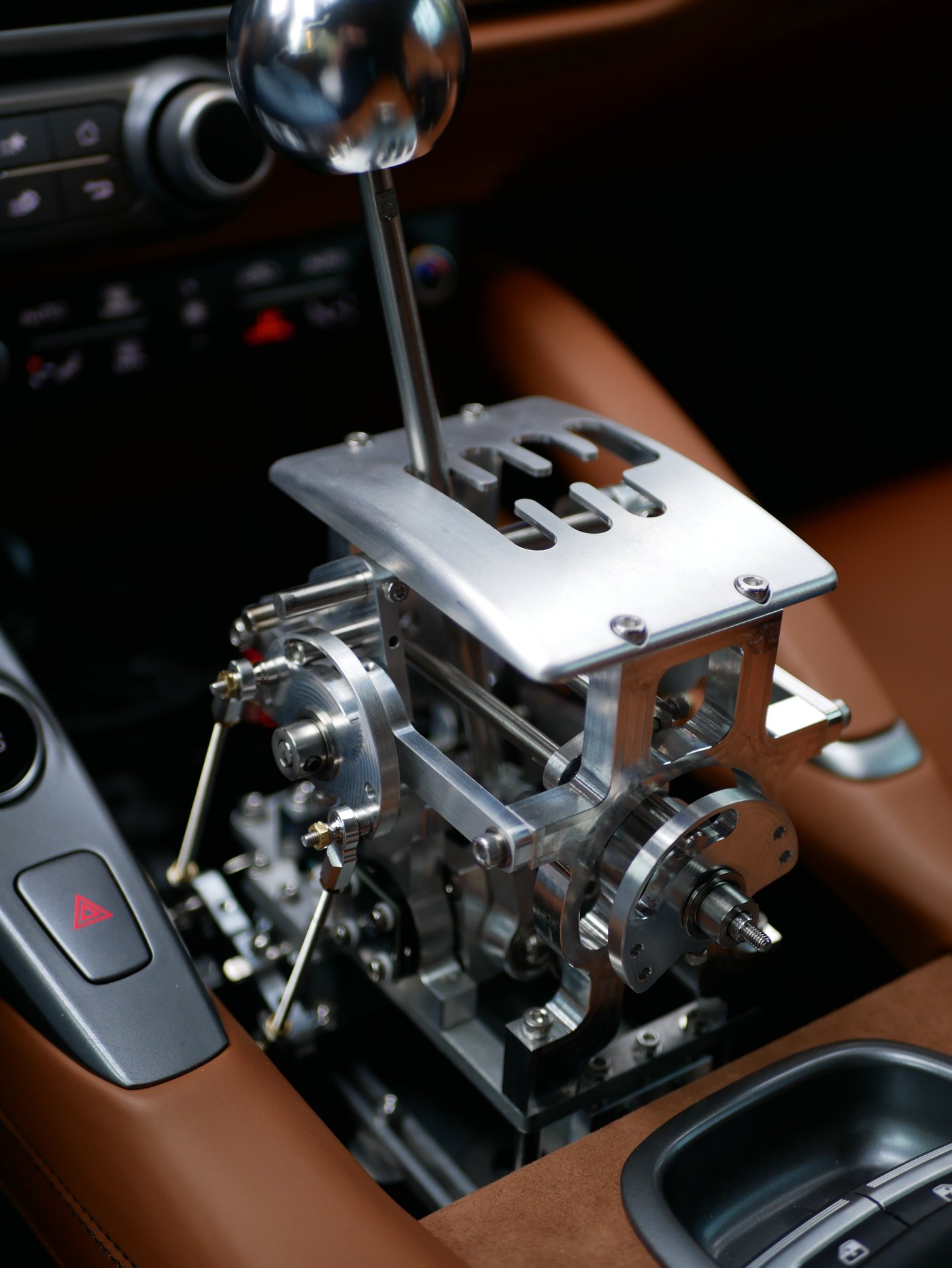
The car is not modified.
The first rule of the project was also the strictest: nothing about the car itself may change. Not a hole drilled. Not a wire cut. Not a trim piece scarred. The device lives entirely within the existing envelope of the vehicle, drawing its signals from the connectors the factory already provides.
It reads the paddle inputs through the harness that is already there. It commands the gearbox the way the paddles do, through the language the car already speaks. When the device is removed — an operation of minutes, not days — it leaves no trace of its passage. Not a mark on the leather. Not a cut in the loom. Not a screw turned where the factory had not turned one. The car becomes, exactly, the car that left Maranello.
This discipline is not incidental. It is the whole idea. A great car should not be defaced to make a point; the point should be made in a way the car would approve of.
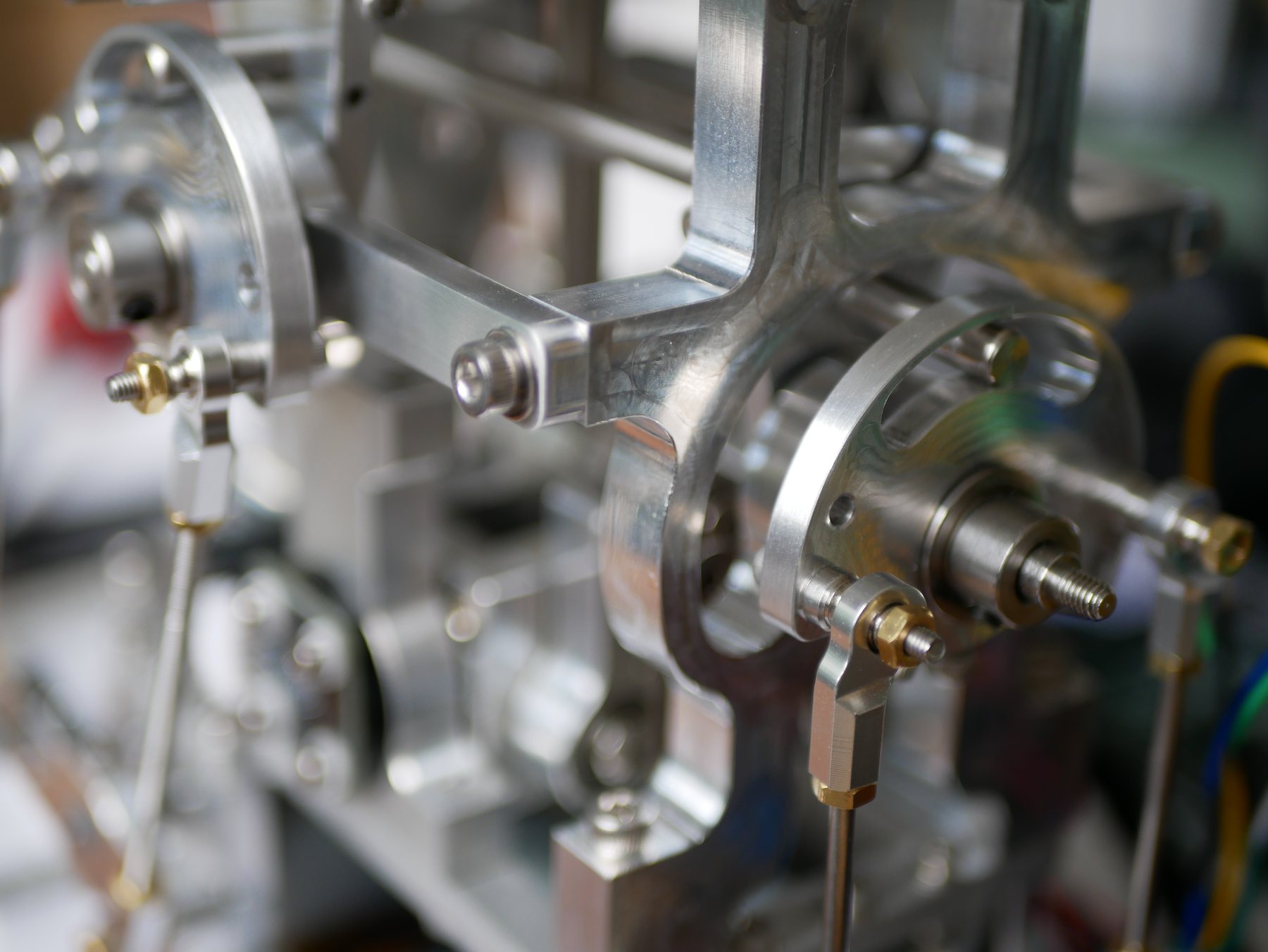
When the car shifts itself, the lever follows.
A manual gate in a car that is not truly manual poses a quiet problem: the car has opinions. It will, occasionally, downshift on its own — a kickdown, a corner, a low-rev crawl that asks for first gear whether the driver requested it or not. If the lever were inert, the gate would begin to lie. The driver would be holding second, and the car would be in first.
So the lever is not inert. A small electromechanical assembly inside the housing moves the shifter, gently and precisely, to whatever gear the gearbox has chosen. The sync is constant: the hand may lead, or the car may lead, but the gate always tells the truth. The illusion, pursued carefully enough, becomes real.
The mechanism is quiet. The motion is close to the speed and cadence of a human wrist. To the driver, it feels less like a machine correcting them and more like the car, having made a decision, politely bringing the lever along.
And the two voices — paddles and lever — are never made to choose. At any moment, on any road, the driver can step from one to the other and back again. A pull at the paddle, a hand on the gate, a paddle again. Whichever instrument speaks, the other listens. The two stay in time the way two musicians stay in time, by attention, not by appointment. The car becomes, briefly, a small symphony with one conductor.
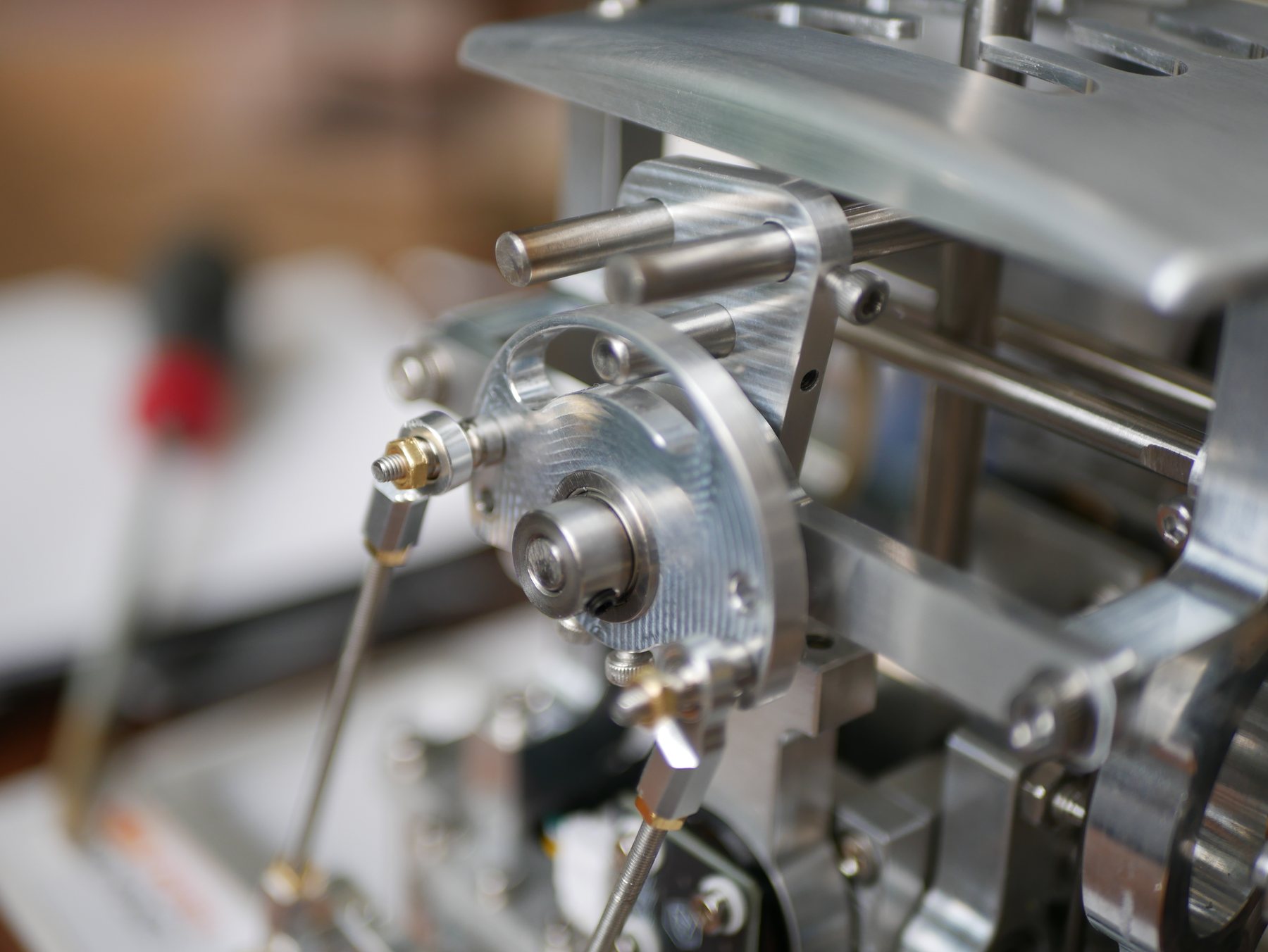
“The hand leads, or the car leads, but the gate always tells the truth.” — On the principle of sync
Beauty is difficulty, patiently hidden.
Nothing about this project was easy, and none of the difficulty is on the surface. Beneath the leather and the chrome lives a network the driver never sees: a CAN bus, running dozens of messages a second in a dialect the factory does not publish. To read it was an act of patience — logging, comparing, listening to the car talk to itself until each message disclosed what it meant. The paddles. The current gear. The engine speed. None of it written down anywhere outside Maranello.
The physical work was slower still. Every aluminium part of the device had to be drawn, machined, and fitted to a tolerance smaller than a human hair — because the gate is the one place where the eye is held and the hand is in contact, and any slack, anywhere, would announce itself. The frames, the cams, the linkages, the bearing seats: each one designed and toleranced individually, then proofed against the others, until the whole assembly behaved as a single object.
The motion of the lever, when the car commands it, is its own small problem in mechatronics. A pair of motors, an angular sensor watching the shaft in real time, a control loop that closes faster than the eye can register: together they move the lever along the gate at the speed and the inflection of a human wrist, decelerating into each detent so the metal arrives, rather than collides. None of this is visible. The polished knob, the brushed plate, the seven slots — what one sees is the shape that all of this complexity, working perfectly, leaves behind. The design is the pure residue of the function.
Complexity, here, is not a cost. It is the subject. A gate that feels right on the first shift, and on the thousandth, is not a simple thing; the whole purpose of the study was to pursue that feeling as far as it could be pursued, and then to put the pursuit away out of sight, so that what remains in the car is only the pleasure.
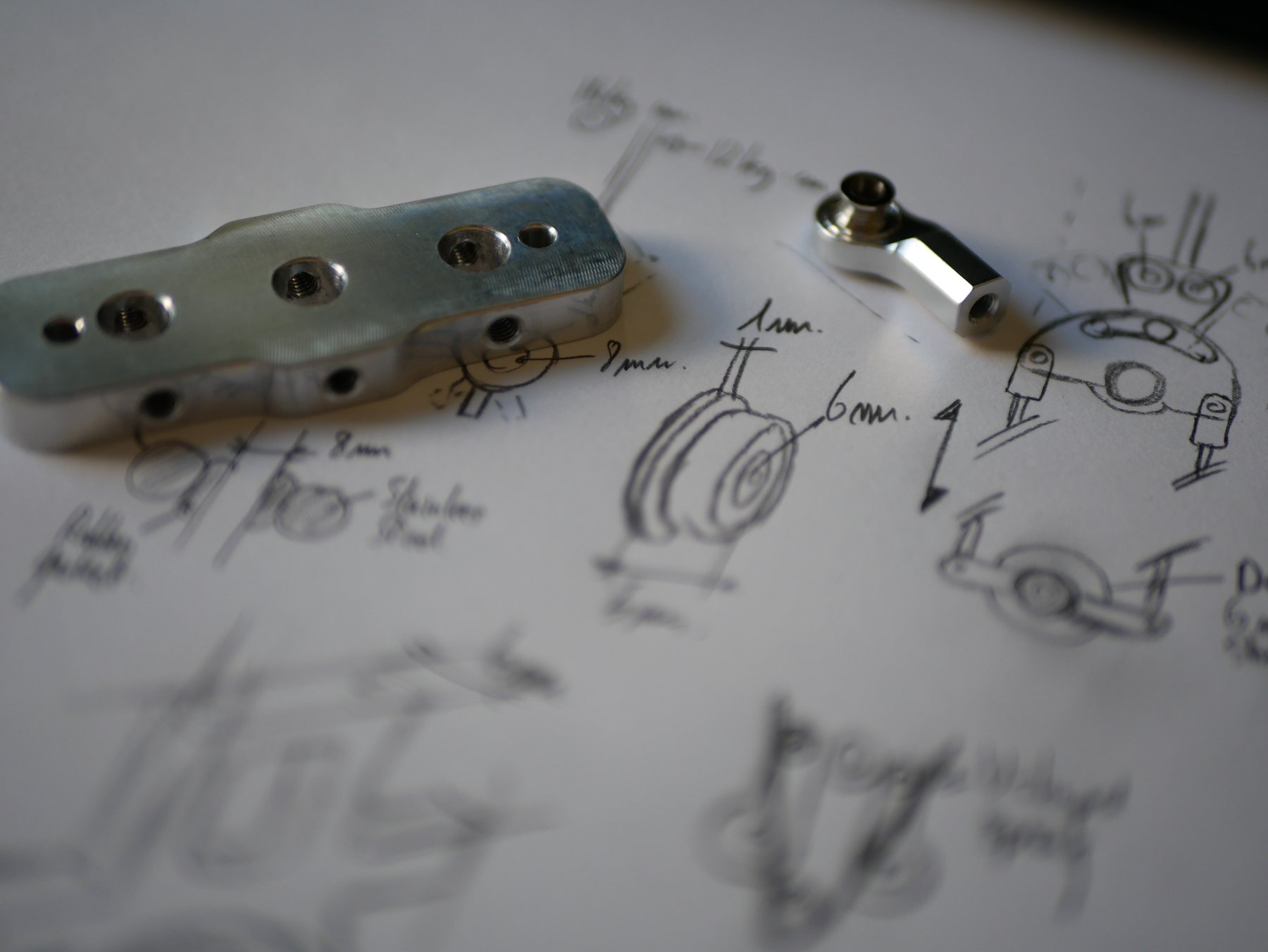
In praise of tasteful driving.
A car of this kind is not transportation. A GTC4 Lusso does not exist because anyone needs to be anywhere. It exists because someone, once, believed that a certain combination of engine, chassis, leather, and sound was worth building, and someone else believed it was worth owning. It is, in the most serious and useful sense of the word, an object of pleasure.
The point of this project is not nostalgia. The paddles are excellent. The gearbox is excellent. Nothing about the modern car is being corrected. What is being offered, instead, is a second grammar — a way of driving the car that treats the act of shifting as something worth doing beautifully, on the days when that is what one wants to do.
On every other day, the paddles are still there. The lever waits, the gate rests, the car is exactly itself.
This study is not finished, and was never meant to be. What began as a single question — could the gate be brought back without harming the car — has answered itself, and in answering it has opened a wider room. There are other cars whose interiors deserve the same attention. Other gestures the modern automobile has quietly retired, that might be worth restoring, with the same discipline. Other ways an analogue hand can speak to a digital chassis without one having to give ground to the other. The work, as it turns out, was a door.
Drive joyfully. Drive tastefully. And, when the road allows it, drive by hand.